
It will come as no surprise to you to know that, perhaps as a result of two years of uncertainty and the resulting need for many people to feel a deeper connection with nature and their surroundings, that the idea of biophilic design is becoming less of a trend and more of a necessity in many commercial and residential developments.
Designers and architects are aware of the growing popularity, some would say need, for buildings and spaces to be designed with an intent to connect people to nature. But how do we encourage designers to engage with us to do so? How to we help them see what we can see?
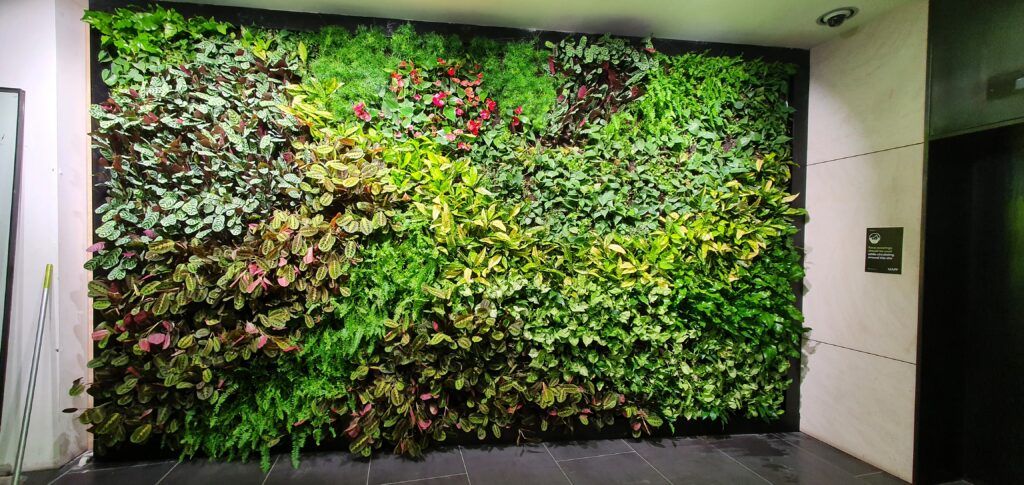
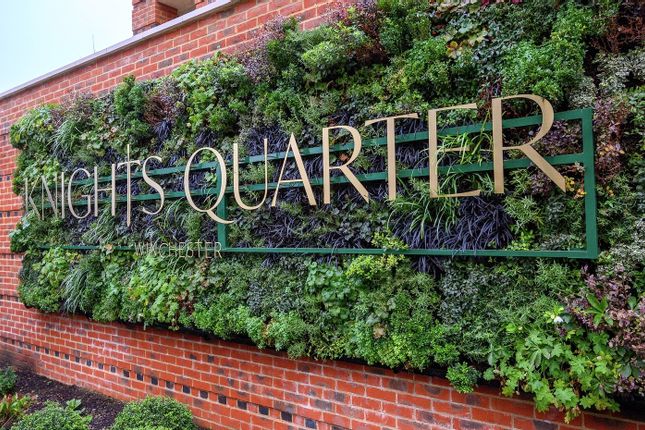
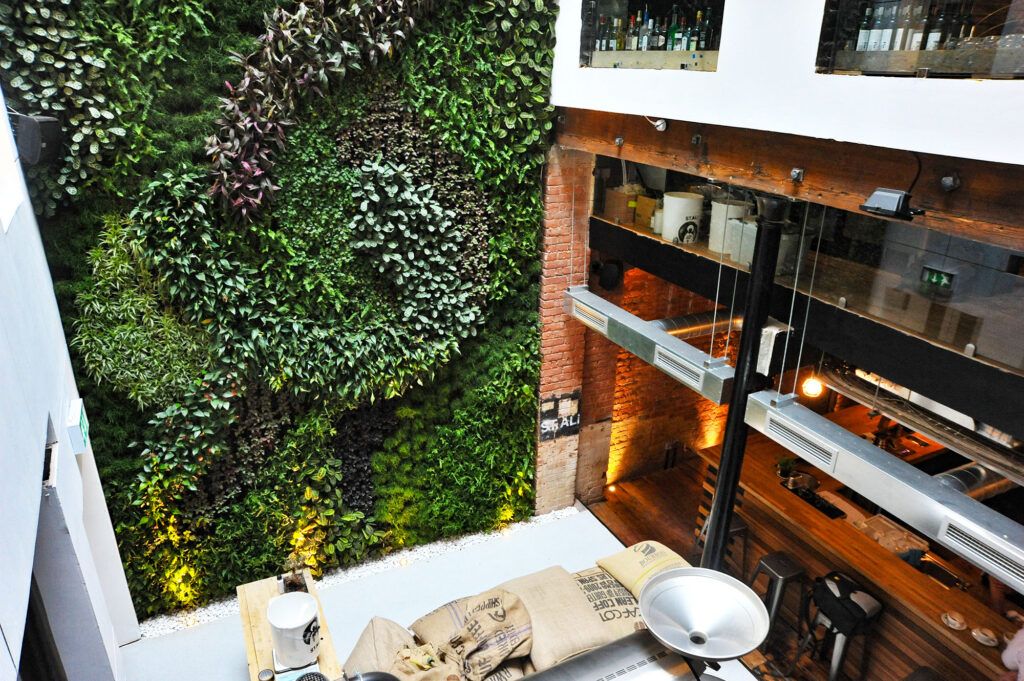
It seems the need to almost re-educate ourselves – and our potential clients – in to a new way of thinking is not only imminent but maybe even unavoidable. Showing real ways to use biophilic design is the single most important way to do this. To showcase the how and the why will be key to curtailing any doubts or niggles that designers may have in regard to making say, a living wall, work in their development. We need to help them feel comfortable adding a living wall to their spec, for it to be as natural (excuse the pun) as considering concrete versus marble for example.
Green roofs have been seen for years, popping up in schools and town centres here and there, but showcasing them in the domestic market is still relatively new. Now is the time to start to show images of how you have used your product in similar settings to those that designers are working on and help them realise how ‘not difficult’ it can be.
A good place to start is perhaps with education. We have found the International Living Future Institute offer some informative and practical guidelines and even a guidebook to implementing biophilic design. It also has a fantastic database of design practitioners and scientists, and creates networking and collaborative opportunities. So maybe we start by helping our clients really understand the facts of how biophilic design is the way forward. Point them towards the ILFI and then answer their questions.
Question time
It is very important to address any concerns clients may have about using biophilic elements in their design. Will the living wall die off and look awful within a year? Will it need a lot of maintenance? Does the structure have to be a specific design or type? Even as simple (to you ) as to what plants can I grow? Who’s going to water all the plants?
As experts in your field, it’s sometimes easy to forget how much of this information you take for granted.
Produce information that your potential client can relate to. Visuals they can really get excited by. Show them the options of what type of moss they can use, with images that reflect the beauty of it. Show them how to define spaces with your planting. How to create impact with your feature wall. Encourage their creativity with ideas of bespoke designs and company logos that suddenly come alive and office spaces that make employees want to hang out.
Share with them the simple key facts that you know are key to the ‘why’ of biophilic design. Like:
- Research has found that those of us working in a space that had plants present were actually 12% more productive, felt less stressed and more creative.
- Less sick days are taken in buildings that have biophilia as a principle design element.
- Employees talk about better attention skills, more concentration, improved social interaction in spaces that have been designed with biophilic elements.
All of this practical, provable, data can help your client feel more comfortable with something they may not yet have had actual experience of. Go back to your market research and share it. Share this blog if you like!
All of this practical, provable, data can help your client feel more comfortable with something they may not yet have had actual experience of. Go back to your market research and share it. Share this blog if you like!
Instagram and other social media platforms cannot be ignored, no matter your point of view. So engage that side of your clients interest too. Will this area you are suggesting for your product suddenly become instantly Instagrammable thanks to your water feature? Will opening up a building to its amazing view suddenly turn it in to a picture frame of sorts. Don’t be afraid to give your client an actual scenario in which they can see their building, space or project being used.
Another important element of using biophilic design within a project that shouldn’t be overlooked, is the impact it has on our mental health. Natural light is, without doubt, the biggest benefit and has been proven to make employees feel more awake at work and sleep better when home. The knock-on effects of this don’t have to be spelt out.
Having an outlook that gives people a view is also regarded as a huge positive to mental health, perhaps because it gives people a sense of life beyond the office? Perhaps because we just all love to sit and stare at the world passing by sometimes? Either way, offering these facts to your clients is not something to shy away from. Now is the right time to promote the mental health benefits of biophilic design far and wide, as it is, quite simply, a better way to live and work.
Designers in situ
So how are designers using biophilic design right now?
The most apparent way is through plants within the home. Walls of hanging ferns, kitchens designed with a shelf full of herbs as a focal point, natural colour schemes (who hasn’t heard that green is the new black?), flooding homes with natural light (wall of bifold doors anyone?), creating vistas and views that connect homes to nature through elements like huge picture windows and glass walls.
Some designers are pushing the envelope and considering grass roofs as an option on extensions in domestic settings and the number is growing. A quick google search now throws up 5,920,000 results to ‘extensions with green roofs’ and the numbers of companies offering a system is also growing (can’t stop the puns, sorry). This is particularly evident in cities where green space is limited. But again, you need to be ready to answer very practical, simple questions – such as do you need planning permission? Will it last? Will it look like an oasis after the summer?
Then there are more simple, cost effective ways designers can join the biophilic bus; introducing room dividers of plants, fitting roof lights where possible to improve lighting, correcting acoustics in a work place, installing artwork that reflects and celebrates nature. All of these are quite easy ideas for designers that will bring in the benefits of biophilic design and encourage take up.
Where we can help
Of course, for all of this you will need the imagery to begin with, which is often the hardest part. How can you showcase how stunning a ‘row of plants’ can look just through words? This is where we come in. We can design realistic images that shine a light on your designs in the way you imagined. Putting them in to ‘real life’ settings and recreating the look you designed it for. Our Virtual Design service helps present your products or properties in the most impactful way.
We design stunning settings and create CGI’s featuring your products. There’s no need to make prototypes, build sets or organise photoshoots, we do it all digitally, providing you with all the images you need for your marketing. We can bring a design scheme to life if, say, you have a new development that’s going to market soon, but you don’t want the expense just yet of installing all the decorative elements.
Stephen Kellert, who helped pioneer the theory of “biophilia” famously said:
“Biophilic design is the deliberate attempt to translate an understanding of the inherent humanity affinity to affiliate the natural systems and processes – known as biophilia – into the design of the built environment.”
Stephen Kellert
This is how we work too, we help translate your understanding of your product in to a visual image that your client can connect with. Get in touch if this is something you’d like to discuss.